Ze-Neuro
The ZEFIX–ZeNeuro zebrafish platform at the MMDN laboratory enables the development of new in vivo models to understand the processes of neuronal degeneration.
We have developed expertise in the development and analysis of the central and peripheral nervous systems, and we currently maintain approximately 30 transgenic and mutant strains.
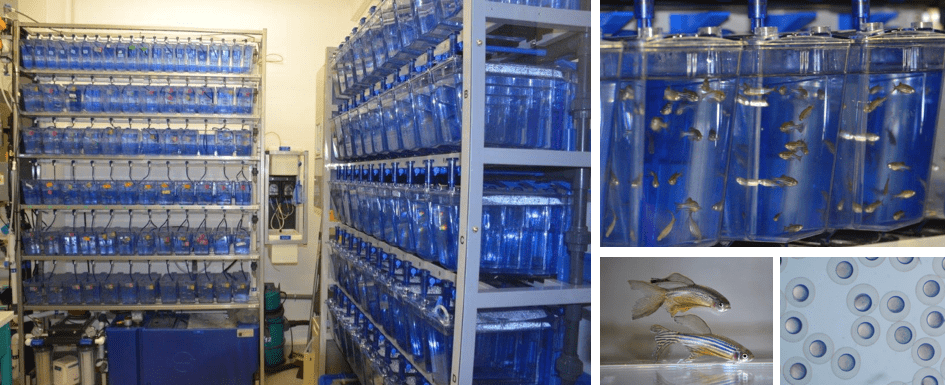
We track the early stages of neurotoxicity, which becomes apparent as early as two days into development in zebrafish. This allows us to monitor neuronal damage directly at both the cellular and organismal levels, including through behavioral analysis using the ZebraSens phenotyping platform. Our models enable us to test candidate proteins or therapeutic compounds.
This platform, which is accessible to the scientific community, has facilitated the collaborative development of various projects:
- Impact of Pesticides and Endocrine Disruptors on the Nervous System
- Study of Candidate Genes in ALS
- Study of Candidate Genes in Optic Neuropathies
In addition, this platform is involved in functional validation for therapeutic agents across a variety of areas:
- Nanoparticles (IBMM, Montpellier)
- Study of Theranostic Compounds (EPHE–University of Burgundy)
- Validation of Neuroprotective Molecules in Wolfram Syndrome (MMDN)
- Validation of Neuroprotective Molecules in ALS (MMDN)
We provide training to students ( Master’s in Bio-Health, Years 1 and 2; Master’s in EPHE), engineers, doctoral students, postdoctoral researchers, and researchers in microinjection techniques at various stages, as well as in the handling of embryos and larvae for imaging. In addition, all users are trained in best practices for using the model (zootechnology, experimentation, and regulations).
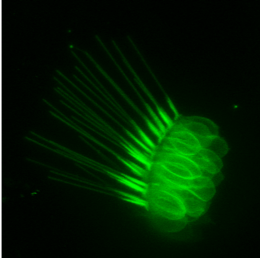
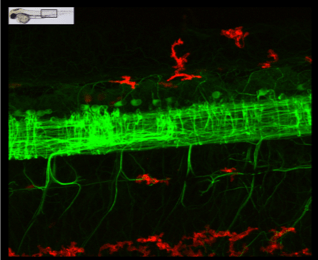
| Hair cells of the ear (cristae), Brn3c-GFP lineage; damage to this structure can lead to balance and hearing impairments | Human tau protein expressed in the nervous system (green) interacting with microglia (red) |