Group 3
Integrative Biology of Neuroregeneration
We are studying the molecular mechanisms underlying neurodegeneration and neuroregeneration in spinal cord disorders, particularly spinal cord injuries (SCIs). There are currently no therapies available for SCIs that induce even partial recovery. The lack of functional recovery results from the absence of axonal regeneration and is attributed, among other factors, to the formation of a glial scar—composed mainly of astrocytes and microglia—which forms a physicochemical barrier. However, glial cells also play beneficial roles in axonal regrowth.
We are developing a multimodal approach with the goal of improving axonal regeneration following an LME.
Our primary research focus is to develop a cell-specific integrative genomic analysis to identify the genes responsible for the dual role of glial cells following an LME. Once identified, we modulate the expression of these genes specifically in glial cells with the aim of enhancing their beneficial roles and reducing their negative impacts on axonal regeneration.
The laboratory’s second area of research is the development of tools for clinical translation. In parallel with our study of motor activity in animals with spinal cord injuries, we are expanding our use of Magnetic Resonance Imaging (MRI). MRI is a noninvasive method that allows for the longitudinal monitoring of anatomical and structural changes caused by spinal cord injury; furthermore, it is the only method used clinically for patients with spinal cord injuries. This project is being carried out in collaboration with the BioNanoNMRI platform at the University of Montpellier, which has a 9.4T MRI scanner designed for small animals.
Finally, we perform a histological analysis to correlate molecular, cellular, and tissue changes with functional recovery.
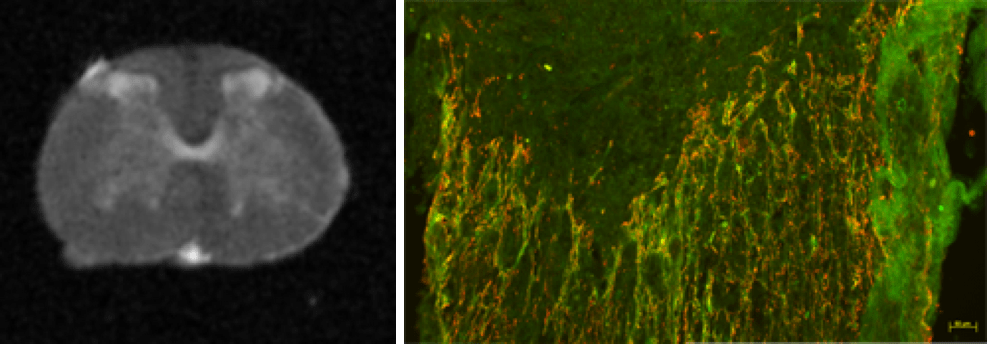
Left: Ex vivo MRI image of an uninjured spinal cord.
Right: Glial scar formed after a spinal cord injury. Astrocytes are shown in green, and microglia in red.